Industry
Cookie consent for automotive
Put configurators, test drive forms and dealer pages on one consent setup, so the lead a campaign paid for is measured with the visitor’s agreement.
Examples on this page use sample data. This is not legal advice.
From configurator to test drive
A buyer comes back several times before booking. This is what consent does at each stage, for a visitor in an opt in region.
- First visit
The banner, before the configurator
Remarketing tags wait for a choice. The configurator itself works either way.
- Return visits
The choice is remembered
The buyer is not asked again, and can change their mind from the privacy button on any page.
- The form
A test drive is booked
If advertising was allowed, the lead reaches Google Ads with the consent signals granted.
- The dealer
The consent behind the lead
The consent receipt shows what was allowed and when.
A car is researched online long before the test drive
Buyers come back to a configurator several times before they book a test drive. Manufacturers and dealers follow that path with analytics and remarketing tags across brand sites, dealer sites and campaign pages, and in opt in regions each of them needs consent.
What goes wrong
- Remarketing tags fire on the configurator before a choice.
- Brand and dealer sites each ask in a different way.
- The dealer map loads third party cookies as the page opens.
What Velo does
- Sets Consent Mode v2 before your tags run and updates it on the visitor’s choice.
- Passes the choice to the Meta Pixel and Microsoft UET.
- Holds scripts marked analytics or advertising until the visitor allows that category.
- Shares one choice across your subdomains.
A dealer group’s test drive form
A dealer group’s site has a model configurator, a test drive booking form, a dealer map and Google Ads and Meta campaigns.
Illustrative example with sample data, not a customer story.
Before a visitor in Italy chooses
Advertising signals are denied, and the configurator’s save feature waits because it’s marked functional. Velo doesn’t hold iframes such as the dealer map, so the site shows a button and loads the map on click.
The booking gets measured
She accepts and books. The lead event reaches Google Ads with advertising granted, and the dealer group can show the consent behind it.
Mark what must wait
Give each third party script a category. Analytics and advertising scripts then stay inert until a visitor allows that category.
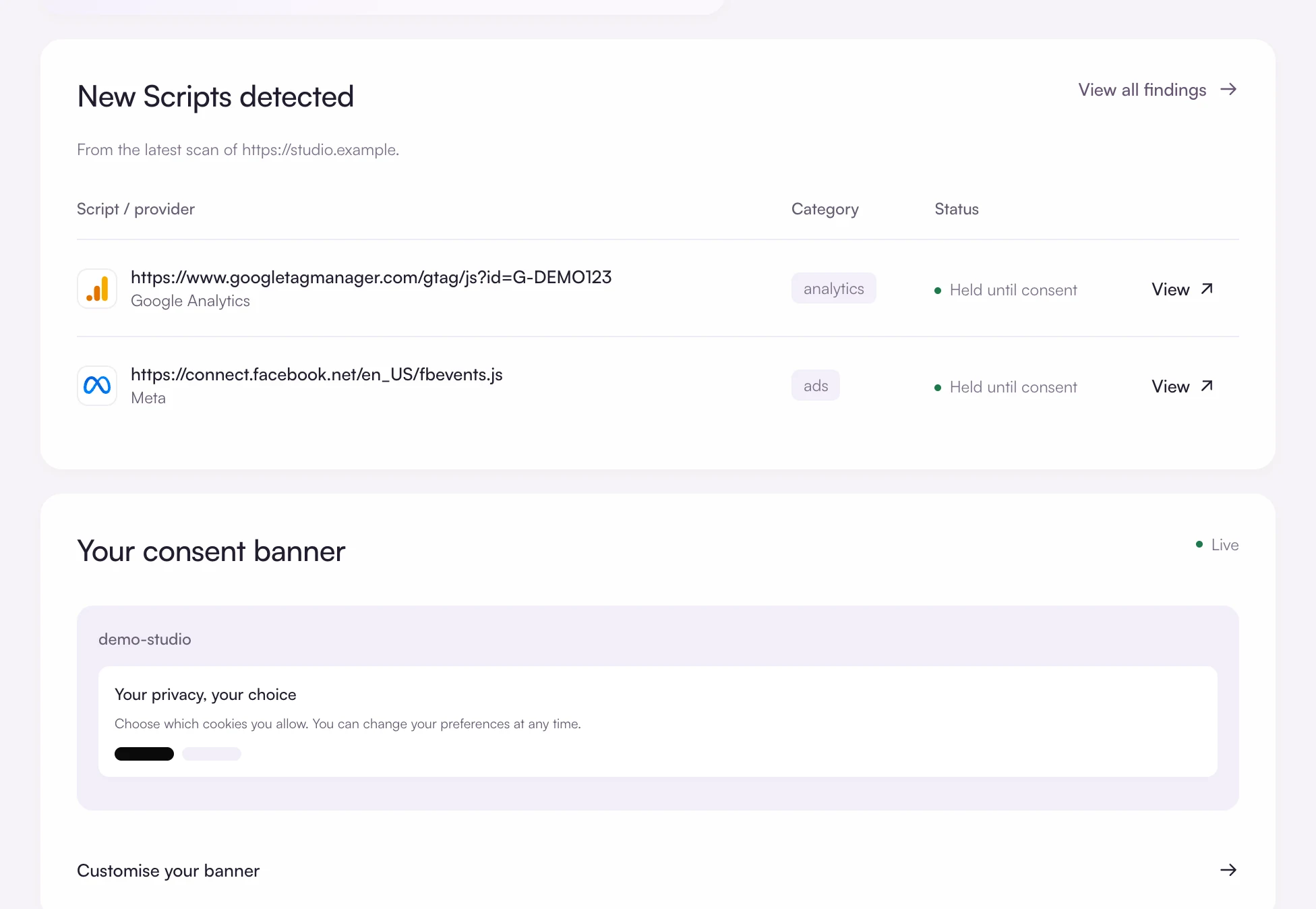
One choice across your subdomains
A choice made on www is read on shop and app under the same domain, so a visitor is not asked twice. Separate domains each ask on their own.
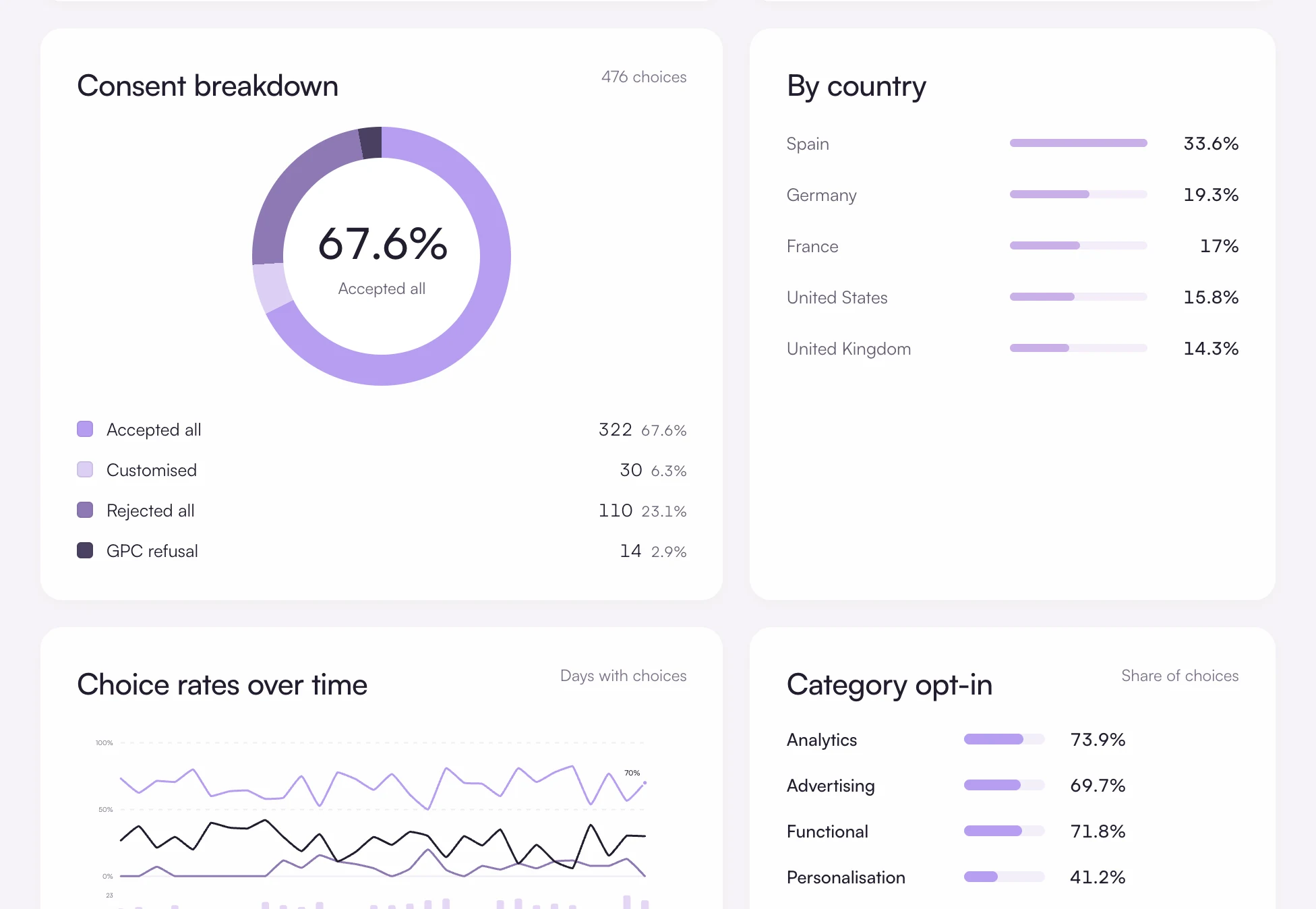
See how visitors answer
Analytics shows accepted, rejected and customised decisions by day and by country, so you can see how a banner change lands.
What Velo covers, and what it does not
The limits, stated plainly, so you can decide before you install anything.
Questions and answers
Can brand and dealer sites share one consent?
Only when they are subdomains of the same domain. Sites on different domains each ask once, though they can use the same banner design and wording.
Does Velo block the dealer map until consent?
Not on its own. Maps are usually iframes, which Velo does not hold. Show a placeholder and load the map after a click, or inject it from a script marked with a category.
Does Velo make my website compliant?
No tool can promise that. Velo gives you a banner with a real choice, regional defaults, consent signals for your tags and a record of each decision. Whether your whole setup meets the law depends on what your site does with data, which is for you and your advisers to assess.
Free for one site
Banner, scan and consent records for one site, free. Pro from €7 a month, plus VAT, for unlimited sites.