Industry
Cookie consent for media and publishing
Put your analytics, newsletter sign-ups and social tags behind one banner that speaks your reader’s language. If you sell programmatic advertising, read the limits on this page first.
Examples on this page use sample data. This is not legal advice.
If you sell programmatic advertising, Velo is not the consent platform for that part yet
Exchanges and Google’s publisher products expect a registered IAB TCF CMP for readers in the EEA, the UK and Switzerland, and Velo isn’t one yet. The rest of a publisher’s page is covered below.
An article page, piece by piece
Publishers’ pages carry more third party code than most sites. Here’s what Velo does with each part, and what’s left for you to do.
| On the page | What Velo does | What is left to you |
|---|---|---|
| Google Analytics | Sets Consent Mode v2 to denied until the reader chooses, in opt in regions. | Nothing, if the tag reads Consent Mode. |
| Newsletter tool | Holds its script until its category is allowed. | Mark the script with a category. |
| Meta Pixel | Tells the pixel whether consent is granted or revoked. | Nothing, if the pixel is on the page. |
| Video and social embeds | Nothing, because Velo doesn’t hold iframes. | Load them after a click, or from a marked script. |
| Programmatic advertising | Nothing, because Velo doesn’t write a TC string. | If your site depends on it, use a registered TCF CMP. |
A regional magazine with readers abroad
An online magazine runs Google Analytics 4, a newsletter sign-up, the Meta Pixel for subscription campaigns and embedded video. It sells sponsorships directly and runs no programmatic advertising.
Illustrative example with sample data, not a customer story.
Before a reader in France chooses
Google Analytics waits with its signal set to denied, and the Meta Pixel is told consent is revoked. The newsletter script is marked functional, so it doesn’t run yet. Velo doesn’t hold iframes, so the magazine loads the video embed only after a click.
The banner, in the reader’s language
A reader whose browser is set to French gets the French banner, and a German reader the German one. You can rewrite the wording for each language in the banner editor.
Readers are there for the article. The banner should speak their language, give them a real choice and then get out of the way.
Scan before you decide
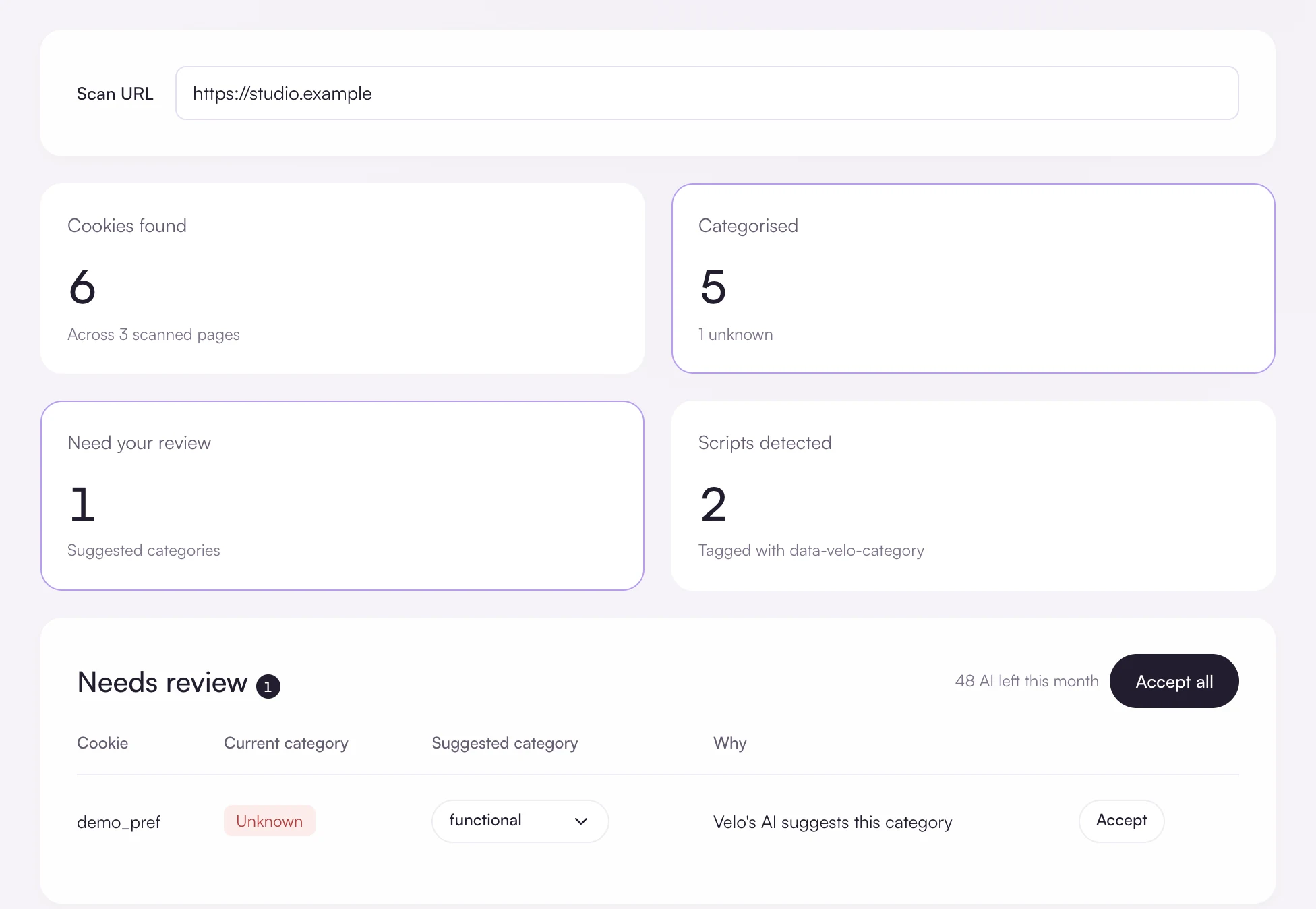
The console scanner visits up to three pages of your site before and after accepting, and lists the cookies, marked scripts and local storage keys it finds.
See how visitors answer
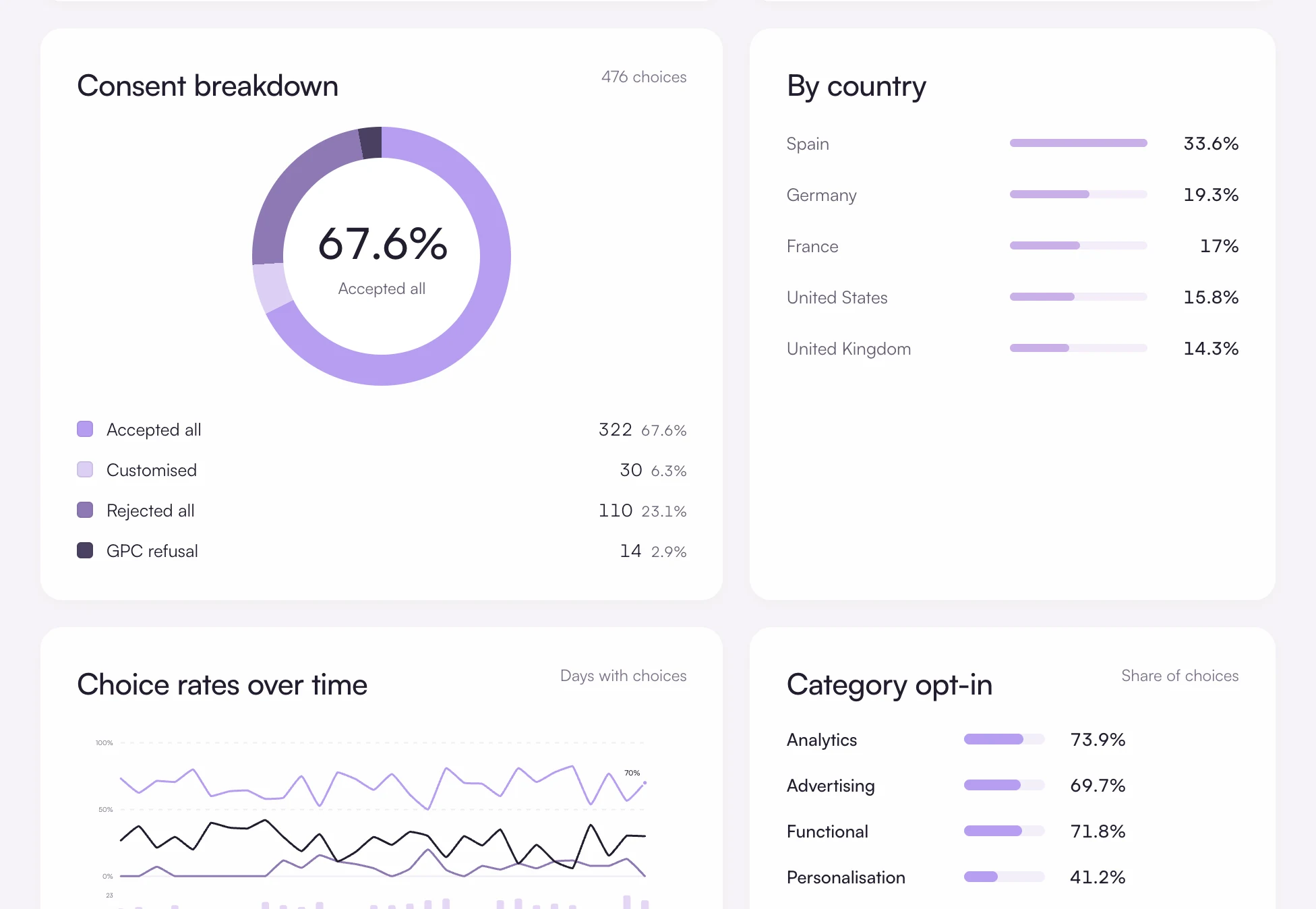
Analytics shows accepted, rejected and customised decisions by day and by country, so you can see how a banner change lands.
What Velo covers, and what it does not
The limits, stated plainly, so you can decide before you install anything.
Questions and answers
Can a publisher with programmatic advertising use Velo?
Not for that part. Exchanges and Google’s publisher products expect a registered TCF CMP for visitors in the EEA, the UK and Switzerland, and Velo is not one yet.
Does Velo block video or social embeds?
No. Velo holds back the scripts you mark, but it doesn’t block iframes. Show a placeholder and load the embed after a click, or inject it from a script marked with a category.
Does Velo make my website compliant?
No tool can promise that. Velo gives you a banner with a real choice, regional defaults, consent signals for your tags and a record of each decision. Whether your whole setup meets the law depends on what your site does with data, which is for you and your advisers to assess.
Free for one site
Banner, scan and consent records for one site, free. Pro from €7 a month, plus VAT, for unlimited sites.